Research in the Rainforest: How a BS-ES Student Became “Boyai de Oyo” in the Amazon
This summer, Professor Brian Griffiths of the BS in Environment & Sustainabilitybrought six Georgetown University undergraduates and one graduate student to the Amazon for three weeks of fieldwork focused on mammal conservation, management, and ecology. The students, including Anthony Orphanos (BS-ES’29), walked hundreds of miles alongside Indigenous elders and leaders to collect data that will inform management of one of the most biodiverse protected areas in the world and contribute to the long-term research program of Professor Griffiths’sMammal Conservation Lab.
Professor Griffiths, or “Dr. G,” as he’s known by his pupils, and Anthony share what makes this experience of conducting and publishing research funique and transformative for undergraduate students.
Dr. Griffiths, let’s start with the work that brings you and your students to the Amazon. What does this hands-on research experience look like, and how are students directly involved in the fieldwork?
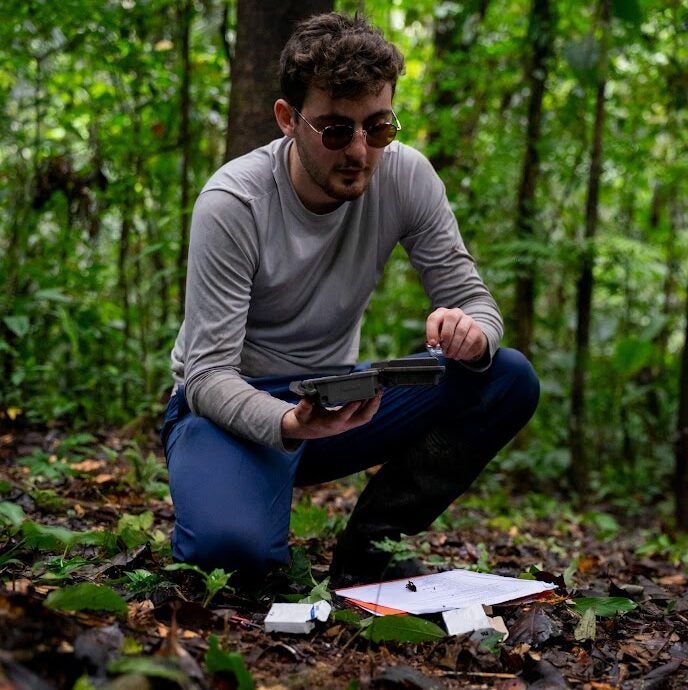
We had two main projects this year: working alongside Indigenous hunters to set camera traps throughout their ancestral lands, which will monitor hunted mammals as part of the implementation of a wildlife management plan, and collecting soil samples to be analyzed for environmental DNA at critical sites for animals. Students really drive our research. They are on the “trail” (they make their own trails with a GPS really) every day with a backpack full of camera traps and equipment, and come back with a bag full of environmental samples. They work with our community partners to conduct the science in an ethical and safe manner, and forge bonds through shared experiences in the forest. We wouldn’t be able to conduct this research without a team of students that’s willing to dive into the rivers, trek across palm swamps, weather torrential downpours, and jump out of bed the next morning ready to do it again.
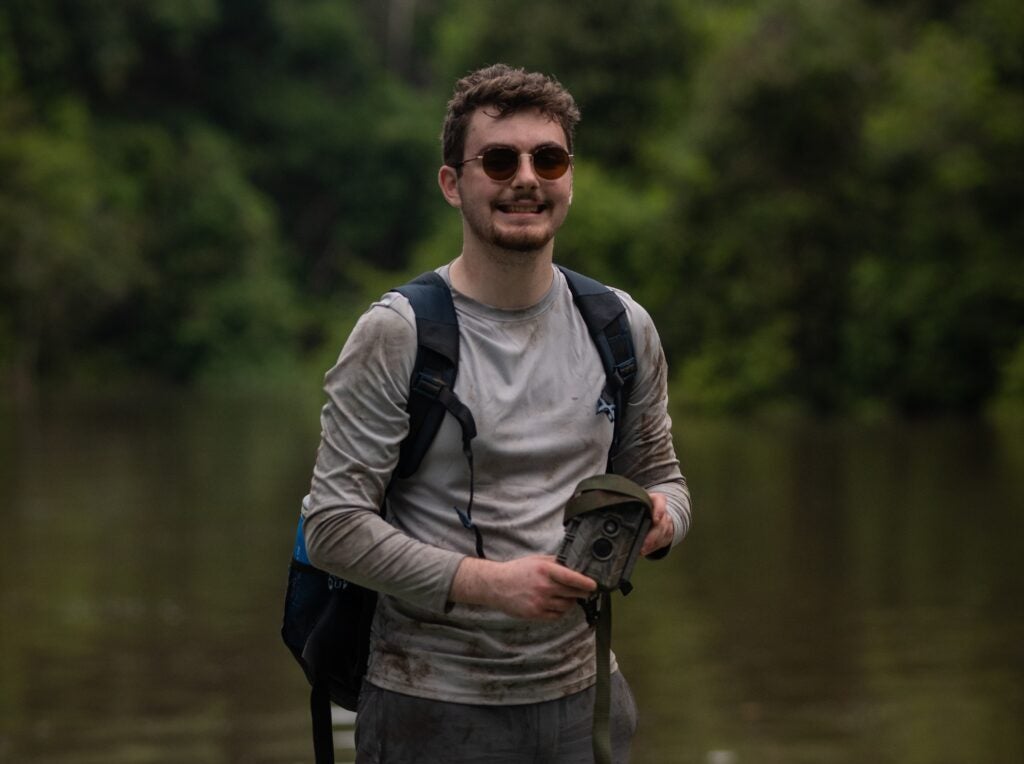
Anthony holds a camera trap after a long and muddy hike.
Anthony, you participated in the expedition this past summer and collaborated on the research itself. What was the most exciting part to contribute to?
There were three main areas of the research project that I focused on. The foundation of all the research is collecting the data, which we did through deploying camera traps. Camera traps have a straightforward procedure, but the bigger challenge is navigating through the trails (or lack thereof) to deploy them. You have to avoid huge spines, painful ants and wasps, and sometimes even snakes! After the fieldwork, I helped analyze camera trap photos and identify species for our papers.
I worked on two manuscripts this summer. The first was a co-authorship on a paper about the effectiveness of camera traps and their possible downsides with animal behavior. The second paper was a project that I led as the lead author with Dr. Griffiths’ help. Prior to my trip, I read a plethora of scientific literature on the ecology and anthropology of the region, and I took a liking to a specific microhabitat that only had about three known papers. The microhabitat was called a “supay chacra” (“devil’s garden” in English) that has unique ecology and significance to Maijuna culture. I wanted to take up Dr. Griffiths’ Mammal Conservation Lab’s mission of sustaining the Maijuna through studying mammal populations in this overlooked microhabitat.
Dr. Griffiths, why is it important for students to gain hands-on experience in the field? How does this experience complement what BS-ES students learn in the classroom?
Hands-on experience is critical to students learning environmental science. Nature is our best classroom, and has been for millenia. There are things that you need to learn to be successful, and some of that comes in our formal classrooms on campus. Students on my team need to know how to think critically, work in diverse teams, make independent decisions – and they need to know how ecosystems and socioecological systems work. The rest they need to learn in the field: creating ethical collaborations, collecting data in extreme conditions, the curiosity and persistence to ask key questions, and the work ethic and motivation to have attention to detail and positivity in the face of adversity. We read and make maps, crunch numbers, observe species, host community meetings, exercise the hard and soft skills – all of which modern environmental scientists need to be successful.
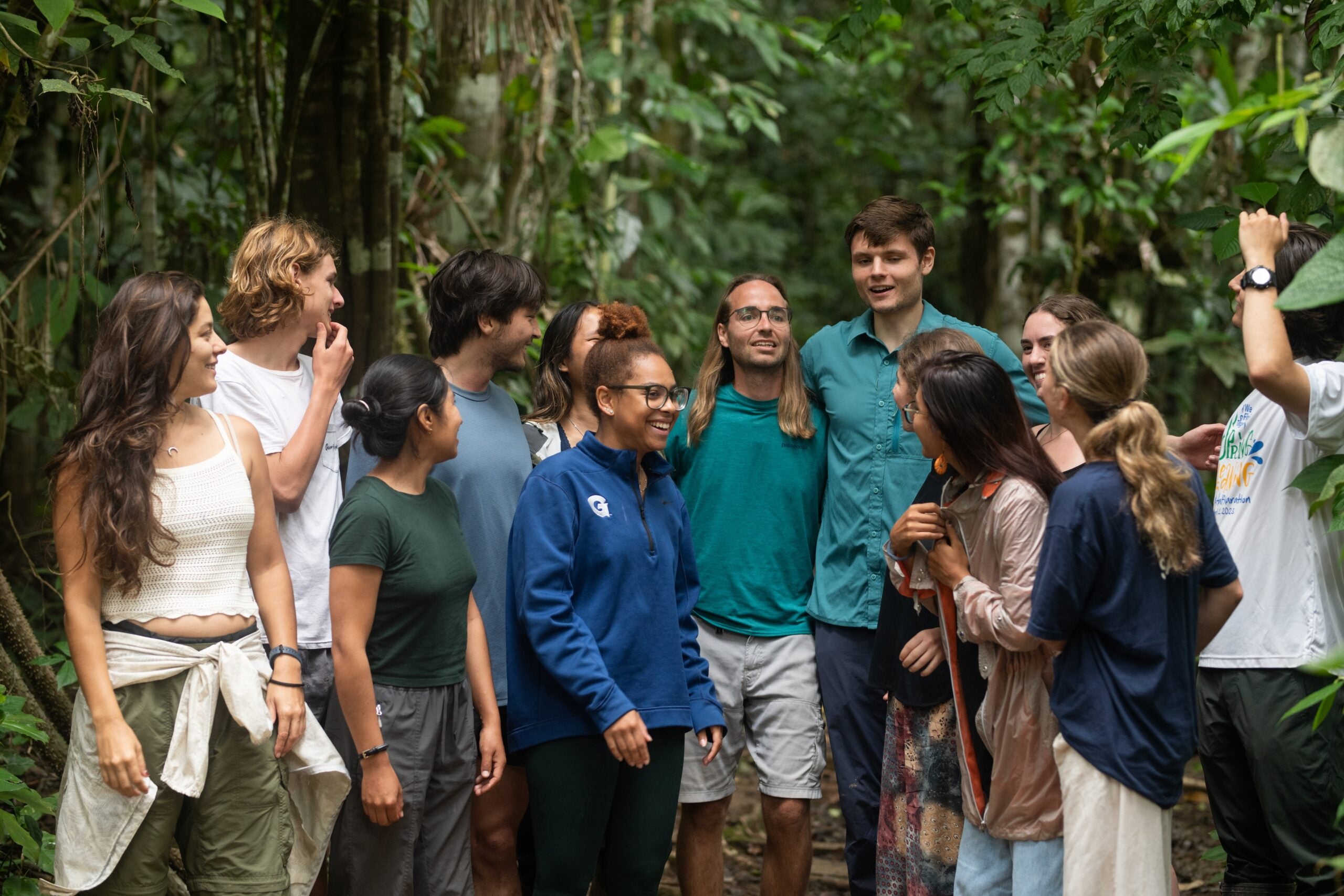
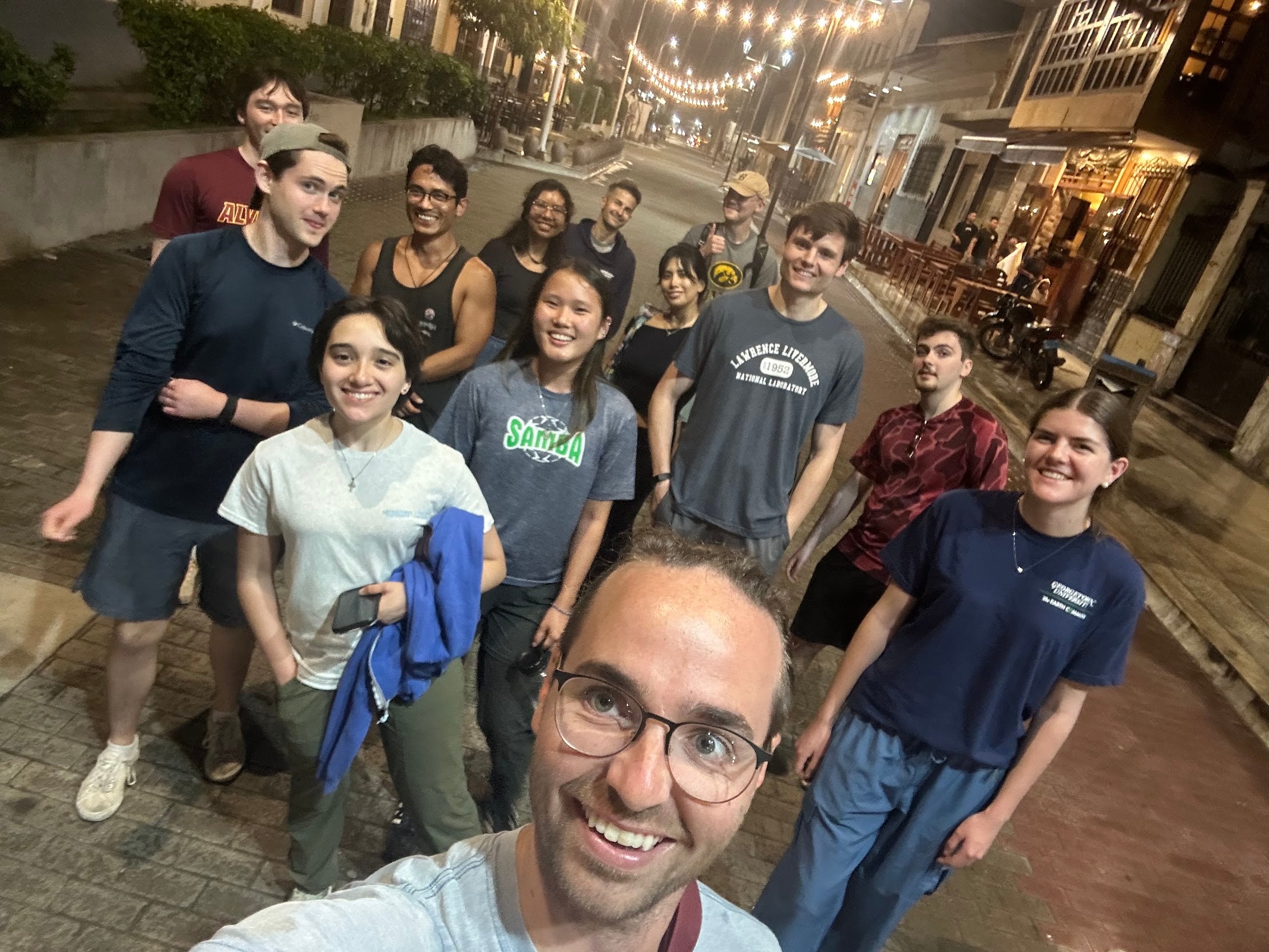
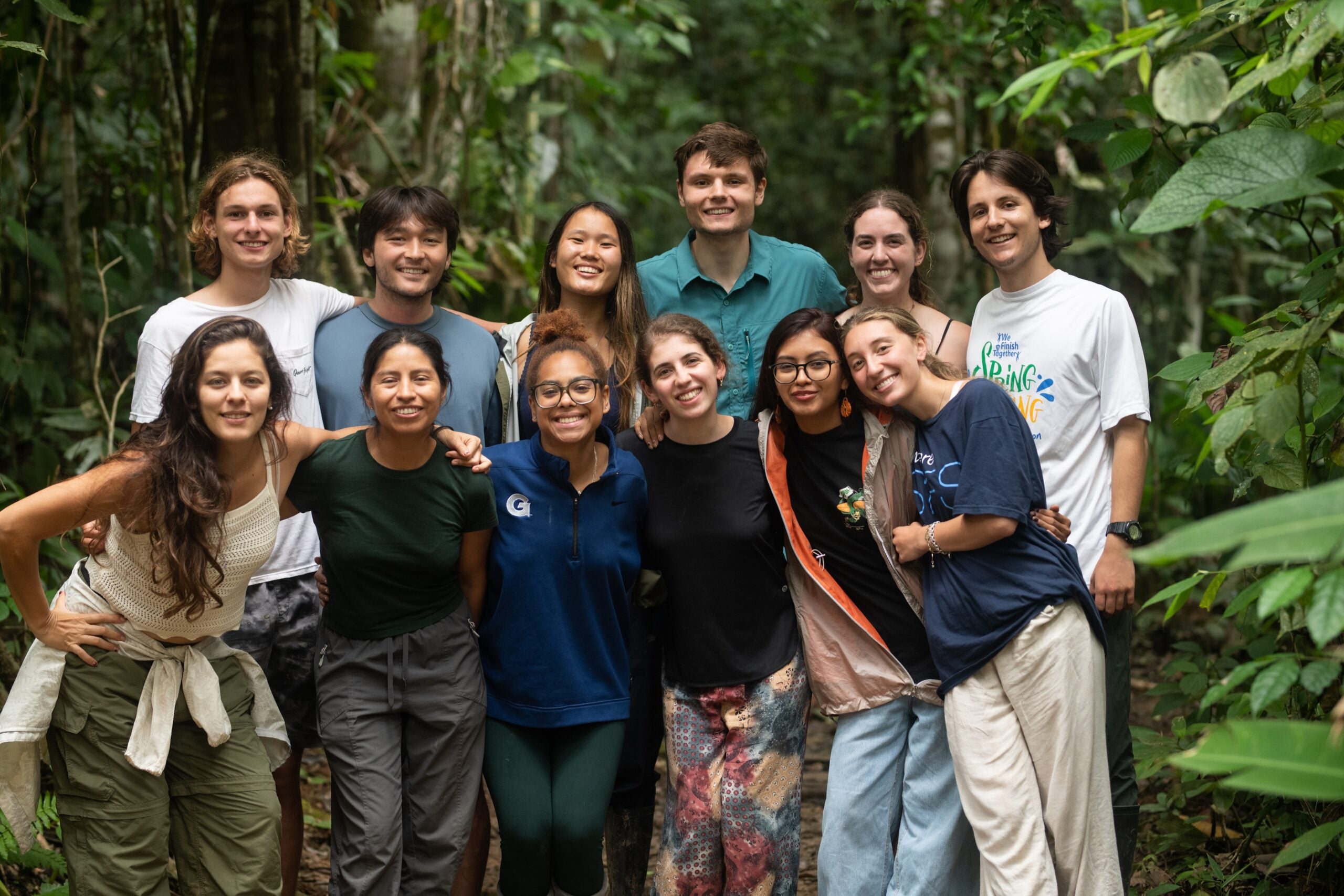
Dr. Griffiths and his 2025 group of student research assistants.
Slide2 of 5
Earth Commons Professor Dr. Brian Griffiths and his Georgetown student research assistants.
Slide3 of 5
Dr. Griffiths and his 2025 group of student research assistants.
Slide4 of 5
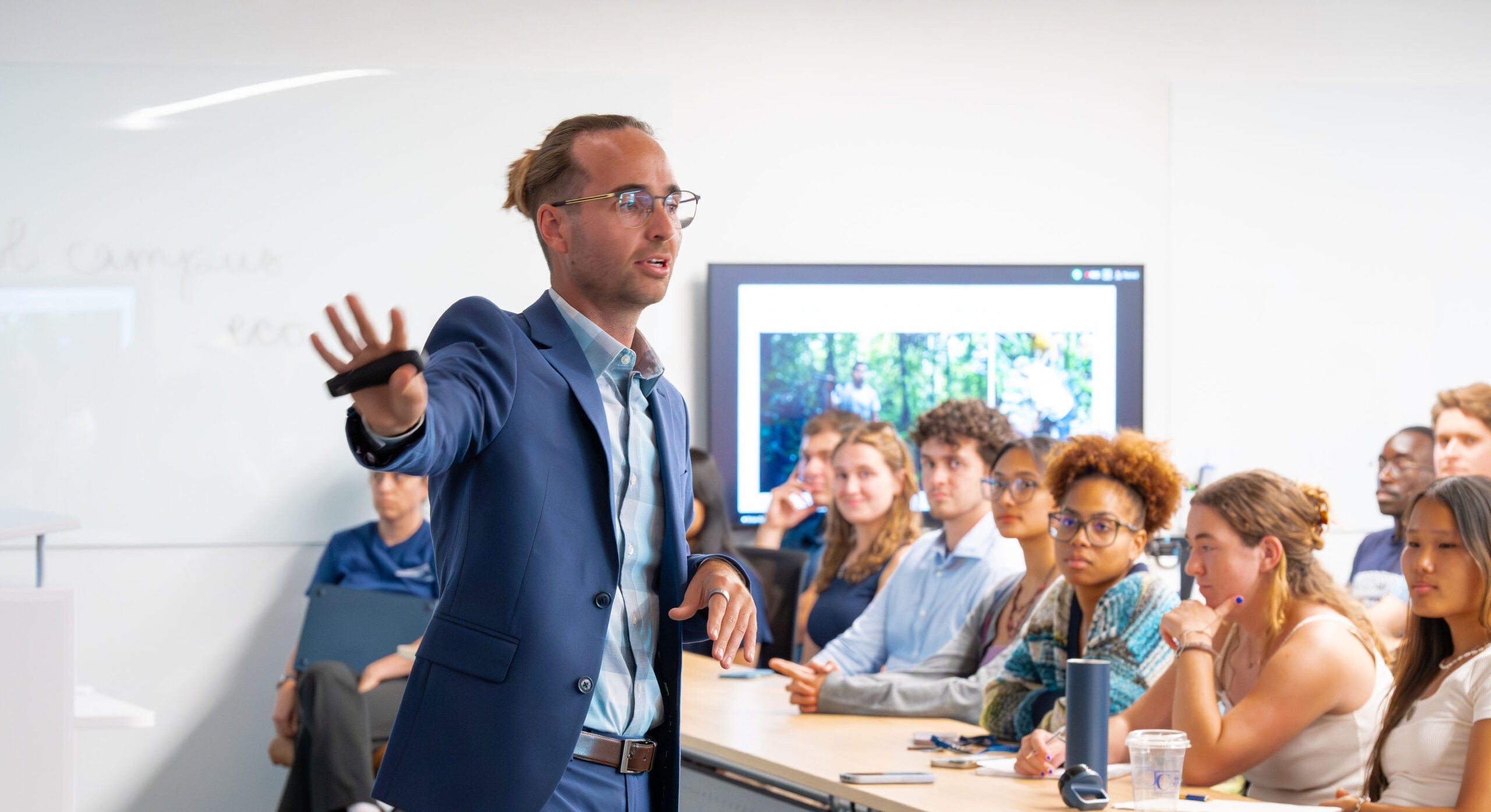
Professor Brian Griffiths presents a talk during a Friday ECo Talks, the Earth Commons lecture series hosted on Georgetown’s Capitol Campus featuring emerging research and environmental initiatives.
Slide5 of 5
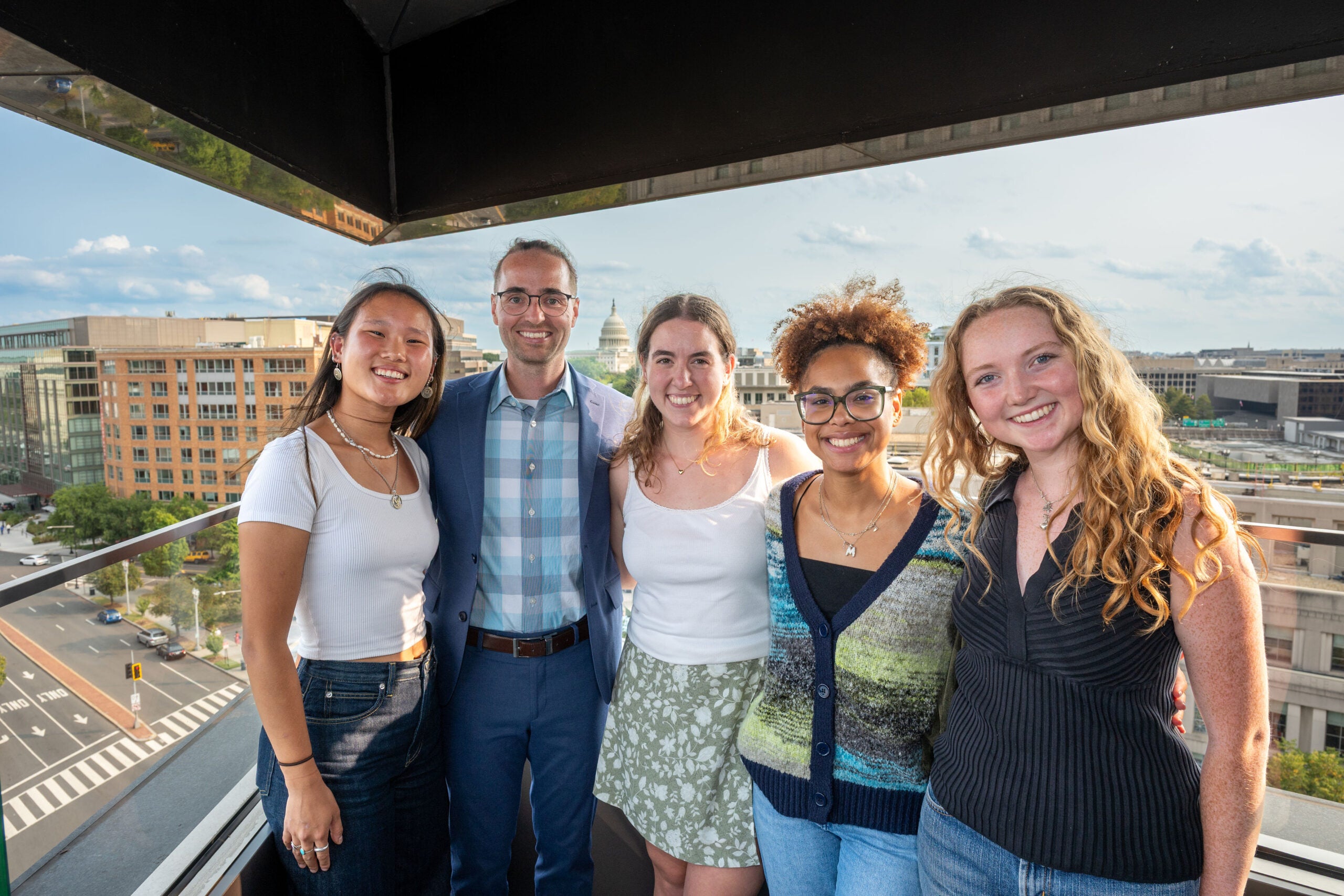
Dr. Griffiths and undergraduates on Georgetown’s Capitol Campus following a weekly ECo Talk environment & sustainability research lecture.
End of carousel collection.
Anthony, what was the most challenging part of the experience, and how did you respond to it? Did you learn anything about yourself in the process?
The most challenging part for me was the lack of experience in all facets of the fieldwork and research. Since I was the youngest student on the trip, I was afraid that my lack of experience would hinder me from contributing meaningfully like upperclassmen. I addressed this challenge by doing extensive reading on conservation biology, the Amazon, mammals, Maijuna culture, and Dr. Griffiths’ prior works. Upon arriving in Sucusari, I found that my diligence prepared me very well and that it made it very easy to communicate and learn from the Maijuna. What I learned is that traveling to a foreign area with limited expertise demands diligence, curiosity, and the tenacity to learn from mistakes and keep going.
I would tell anyone that has read about the Amazon that they need to visit it to actually understand it. – Anthony Orphanos (BS-ES’29)
Dr. Griffiths, this experience sounds amazing, and intense! What part of it do students seem most challenged by?
Yes, this research program is intense, and the Amazon is not for everyone. Students struggle most with balancing the needs of themselves and the team. It’s hard to wake up at 5am, roll out of your tent, and make sure you have everything you need in your backpack for a day trekking through swamps and you’ve taken care of everything you need to do – but then we also have supplies to be loaded, team equipment to organize, medical kits to pack, batteries to distribute. We have maps, data, observations from past years that provide navigation clues which need to be copied into a notebook. It’s pouring rain and the tarp is leaking, you have blisters to bind up, breakfast is sizzling over the fire, and Dr. G is standing on a stump yelling directions in another language over the sound of boat motors.
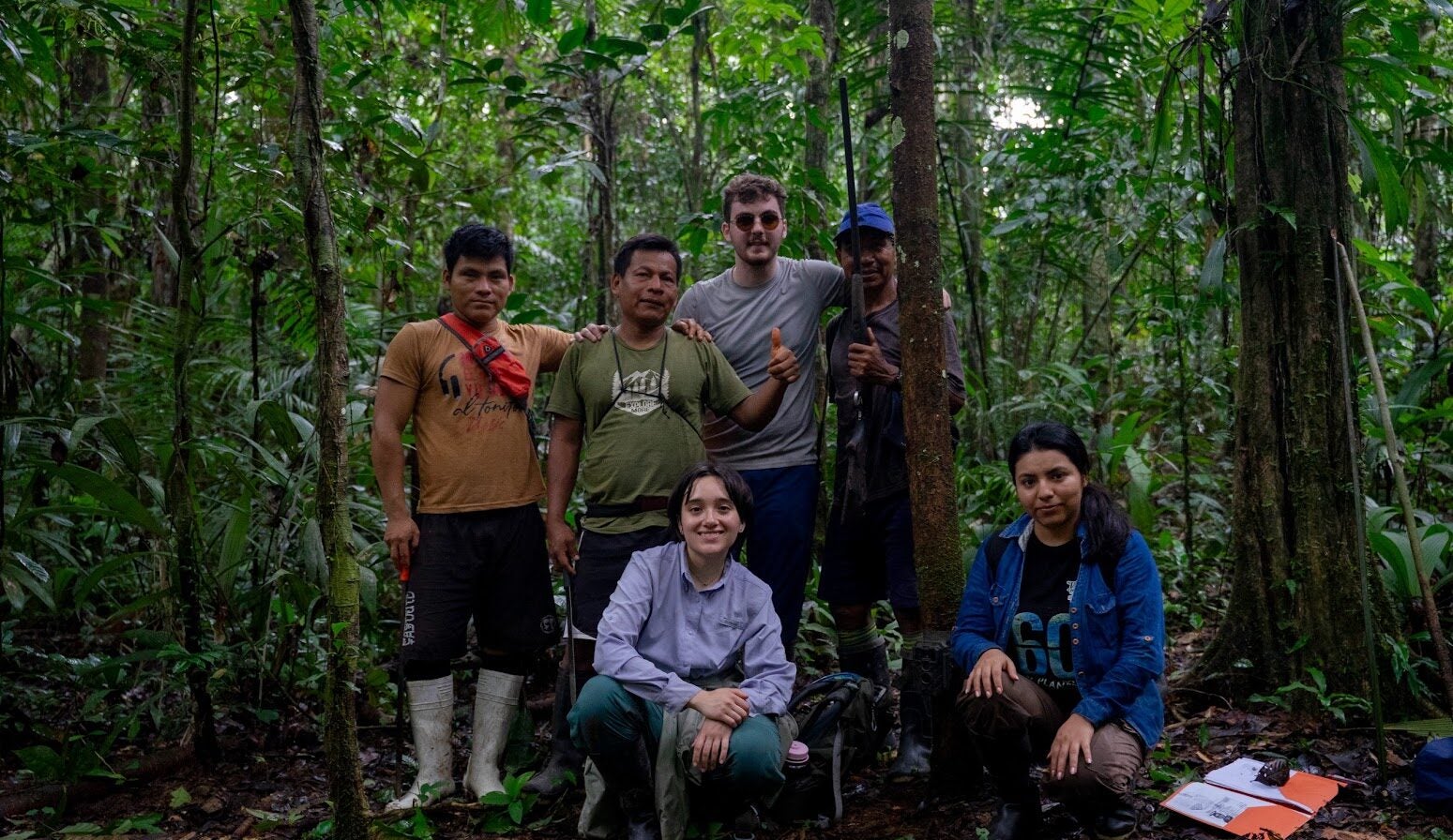
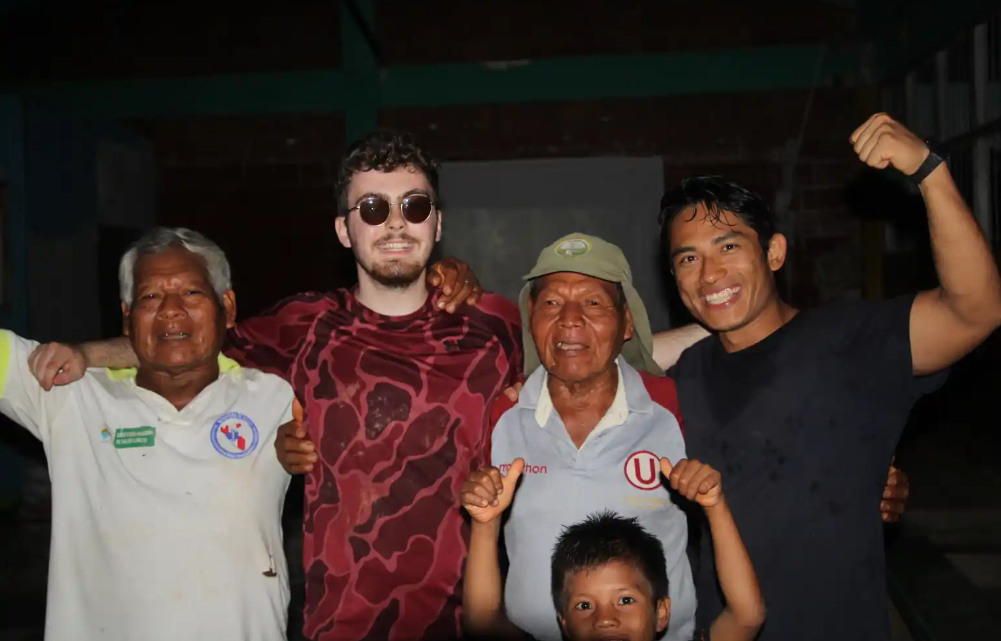
Anthony with Maijuina tribal elders Shebaco and Victorino after a hike.
Slide2 of 2
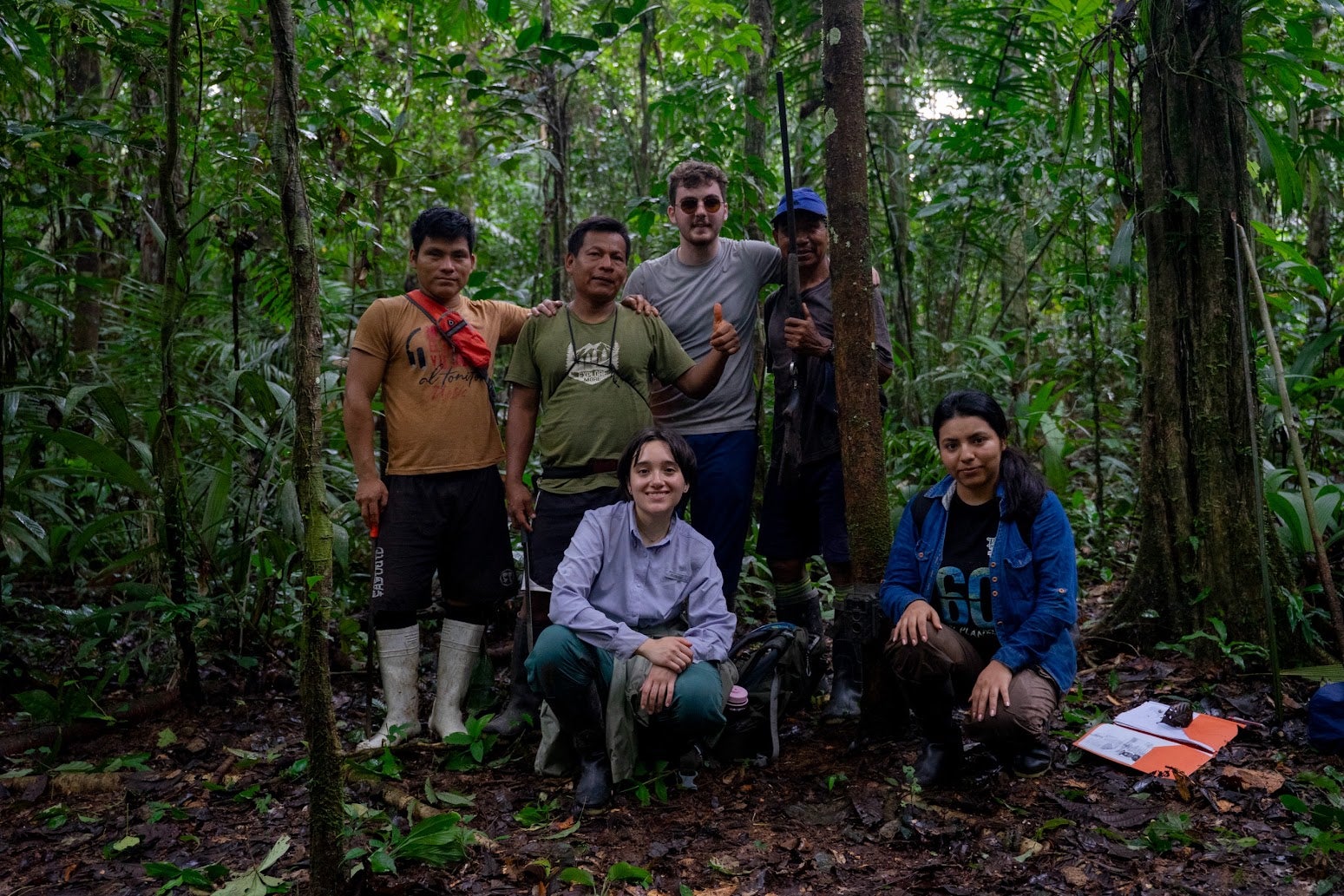
Anthony with a hiking group and three Maijuna guides after setting their last camera trap of the day.
End of carousel collection.
Anthony, you were given a name in Maijiki by Maijuna elders, which doesn’t happen every day. What does the name mean, and what does it mean to you to have received it?
Boyai de Oyo means the White Jaguar of the Bat Clan. The Maijuna elder, Sebastian Rios Ochoa (a.k.a. Shebaco), granted me this name when we returned from our four-day camping expedition. The name was given because I became known as “tigre” or jaguar on the trails since instead of simply walking through rivers or uphills, I had an unorthodox method of jumping and clinging to logs like a jaguar would. In fact, there were people in the village who I had never met, but they would still address me as Tigre! The bat clan subtitle is especially meaningful. There are three clans in Maijuna history: Oyo, Yai, and Dei. Oyo is the clan that Shebaco’s lineage hails from, which made me particularly honored since I felt almost adopted into his family.
My story of receiving the name is that every year, Dr. Griffiths and the community hold a cinema night that compiles camera trap videos from the previous years so that the Maijuna and researchers alike may enjoy the beauties of the jungle together. That night, Shebaco and Victorino, both elders, were whispering to each other in a corner and then suddenly called me over. I stood in front of them when Shebaco said, “Boyai de Oyo,” to me. Confused at the foreign language, I did not understand what he meant until he explained that he gave me a name.
This knowledge defined what was the proudest moment of my life. I have touched the hearts of these people out of my curiosity and respect for them, and in return, they accept me with a name in their culture.
At the time, I did not know this was a big deal, and I thought he was just trying to teach me more Maijiki because I wanted to learn. However, the news arrived to Dr. Griffiths, who said this was a huge deal and does not happen very often. In fact, it took him a few years to receive a name! This knowledge defined what was the proudest moment of my life. I have touched the hearts of these people out of my curiosity and respect for them, and in return, they accept me with a name in their culture.
The next day, Shebaco invited me over to his house where we had a private Maijiki lesson for a few hours. To this day, I am studying Maijiki in my free time and talk to Shebaco at least once a month to speak in Maijiki.
Anthony, was there a particular moment from the trip that stands out to you?
While it is hard to choose a favorite moment out of such an unforgettable excursion, my favorite experience was toward the end of the expedition when we were camping remotely upriver in Belisario. After an arduous day of hiking, I sat around the campfire with the Maijuna and talked to Shebaco for hours about Maijuna traditional stories. I have never met such a captivating storyteller.
I wrote everything he said down in my ethnography journal that I kept, including the traditional narrative for supay chacras which I would soon be studying. It was during these moments that my camaraderie with the Maijuna flourished. While talking to Shebaco, Victorino looked through my field guide of Amazonian mammals, and he told me all of their names in Maijiki, which I still remember to this day.
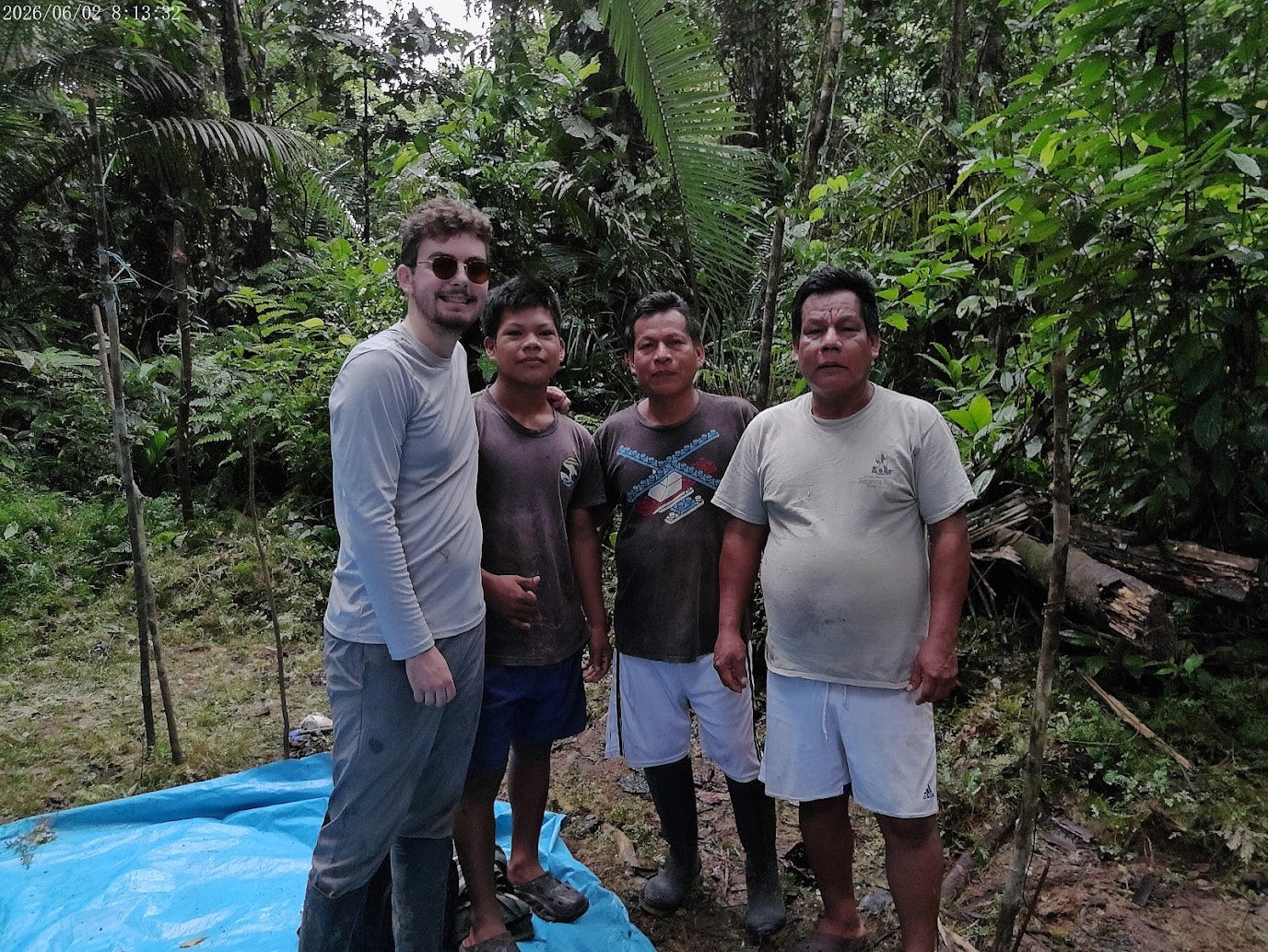
Anthony with three Maijuna hunters at the Belisario campsite.
Slide2 of 3
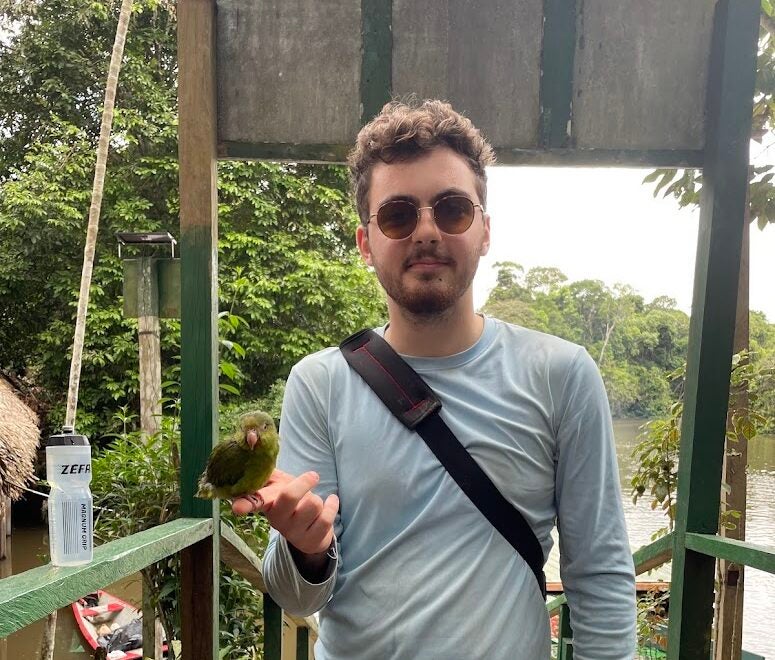
Anthony with a green parakeet perched on his finger.
Slide3 of 3
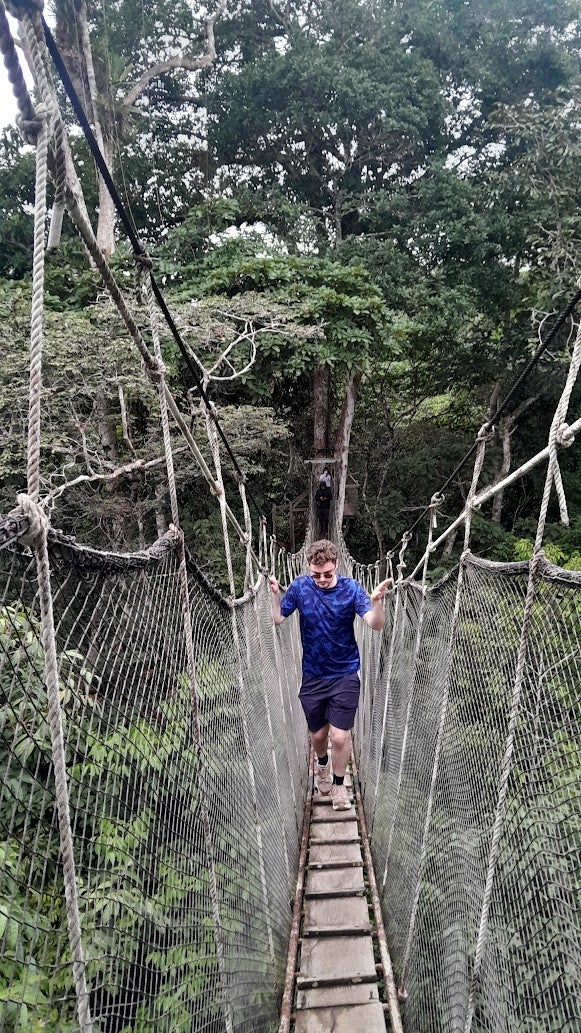
Anthony walks in the ACTS canopy walkway, the longest in South America.
End of carousel collection.
Anthony, what was it like working alongside Indigenous elders, leaders, and hunters? What did you learn from them that you could not have learned in a classroom?
The Maijuna guides are perhaps some of the most impressive people I have ever met. They could see a bird up in the upper canopy under a branch without binoculars and perfectly identify it. They knew inconspicuous trails and remote locations of microhabitats like the backs of their hands. They have more knowledge of the Amazon and all of its biodiversity than any textbook could ever teach me because it is a way of life for them. That was my biggest takeaway from living with the Maijuna that I like to share with people. To them, sustainability and subsistence on their land is a cultural norm, a way of life. They believe they descend from the natural elements of the jungle, so they try to affect it as minimally as possible. Hearing these primary accounts from people who have walked the forest their whole lives further justifies their fight for environmental justice in retaining their land rights as an indigenous group.
[Students] go from frantic and disorganized to independent and competent in a short time.
Professor Brian Griffiths
Dr. Griffiths, the students who accompany you in this work describe it as a huge moment in their lives. How does it help them grow as scholars and as people?
Students can’t let the chaos and discomfort of fieldwork interrupt the focused thinking that’s needed to collect high-quality data. They learn their own mental and physical limits, and what their basic needs are as a person and as a professional—but then they also learn to step forward and ask what the needs are of the team, and how they can help push forward the collective goal. They go from frantic and disorganized to independent and competent in a short time.
Anthony, you seem really passionate about this work. What do you hope to do in the future? Has anything about this experience changed your hopes and goals?
This experience was undeniably formative in my future career aspirations. Part of seeking a degree in Environment & Sustainability was combining my two passions: science and public service. I fell in love with this trip because I was able to practice both and learn from the experience. I was hesitant that I would not be physically prepared for the hiking and fieldwork aspects, the communication aspect, and the actual scientific aspect, but what I learned is that in all of these facets, the experts are understanding of your mistakes, you just need to put in a conscious effort to keep learning and appreciating the opportunity.
After this research experience, I am hoping to return to Sucusari next year for another expedition, as well as present my research as the lead author at conferences and poster competitions. I also want to begin volunteering and interning at Smithsonian’s National Zoo to work with small mammals, and I want to apply these practical experiences in the Georgetown classroom through advancing conservation studies, remote sensing, and environmental data techniques. Ideally, I would like to pursue a career in conservation biology research or zoology, especially working abroad, and someday, I would like to seek a Ph.D. if possible.
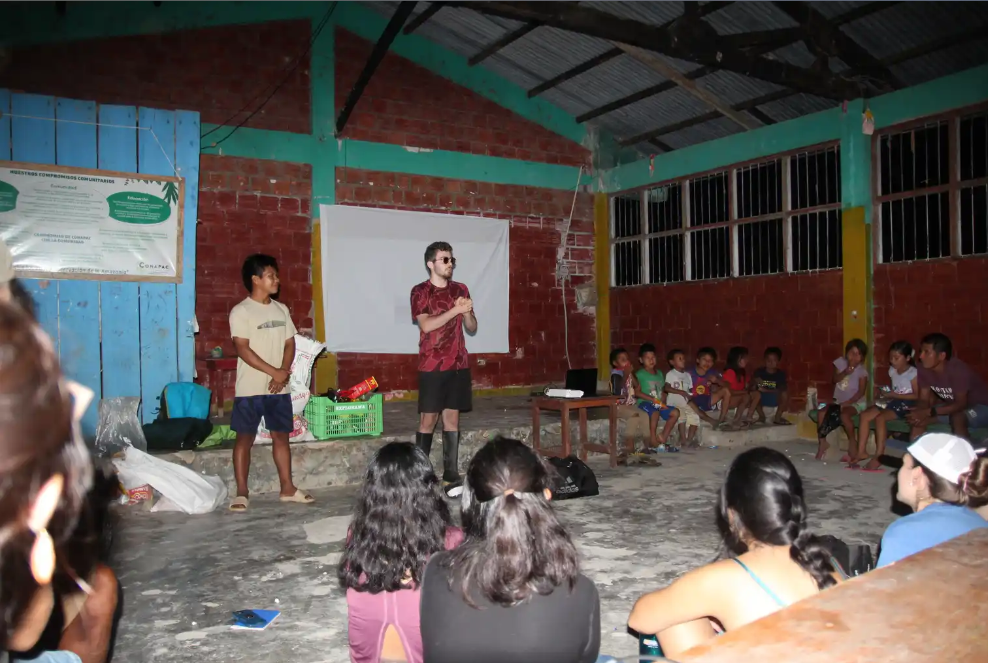
Anthony gives a speech to the Sucusari community and research team after a successful, three week expedition.
Slide2 of 2
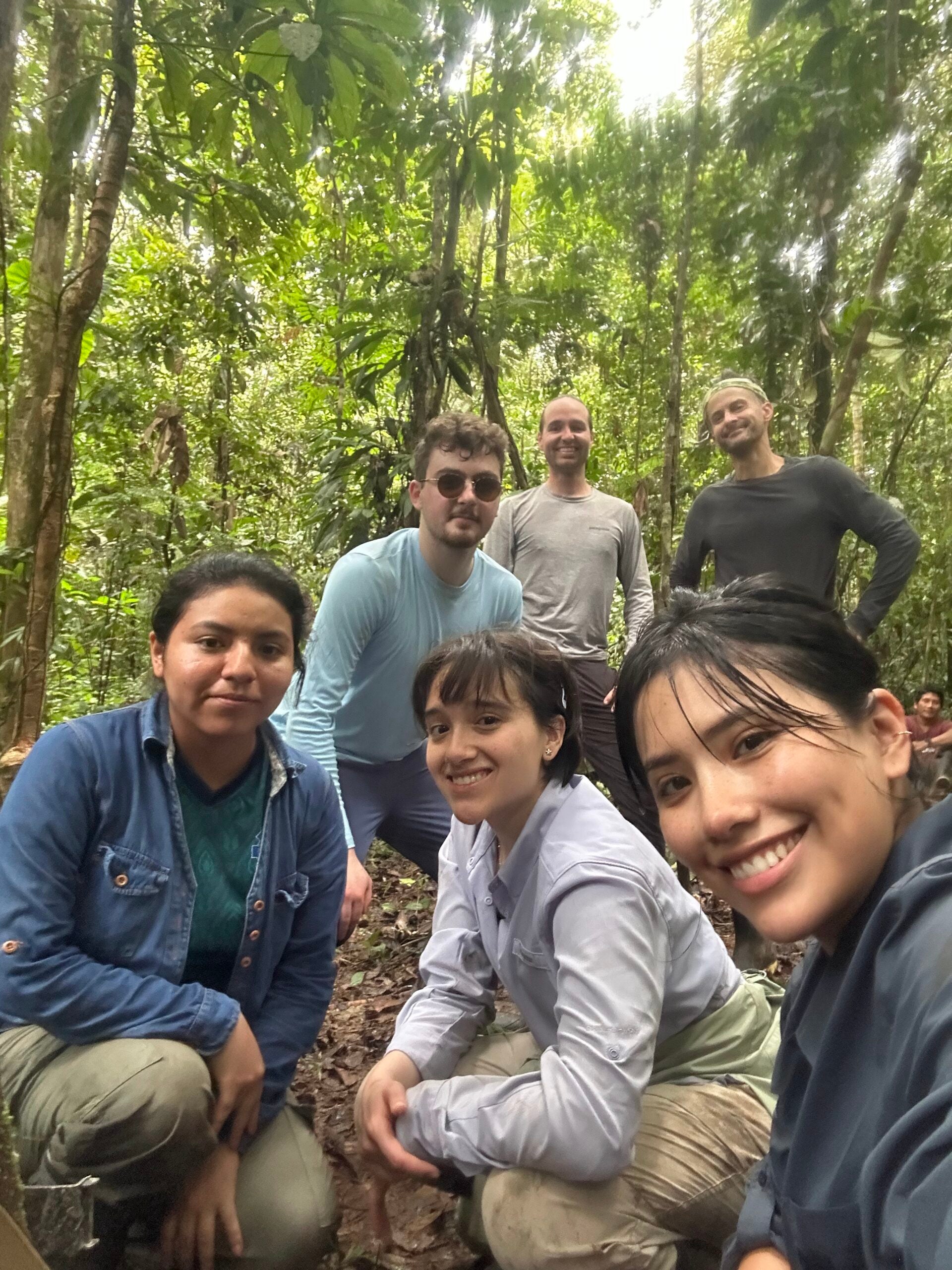
Dr. Griffiths, Anthony Orphanos, and the research team stop on the trail for a group picture.
End of carousel collection.
Anthony, were there skills or ideas you had learned at Georgetown that suddenly became more tangible in the field? Conversely, what did the field teach you that a classroom could not?
Georgetown prepared me exceptionally well for understanding the climate processes, ecology, soil chemistry, and biodiversity that I experienced in the Amazon. Additionally, some of my freshman year classes focused on ethnographic studies, which I informally conducted on the side to develop my thoughts on Maijuna culture. Both of these were crucial in the field as well as the subsequent research products. However, I would tell anyone that has read about the Amazon that they need to visit it to actually understand it. I still do not understand a lot of it—no one does. It is an amazing, vast cradle of life and responsible coexistence between man, flora, and fauna. The Maijuna especially taught me about birds and plants that I have never heard of, and their cultural significance and uses such as building and medicine. Another aspect of the field that was striking was the imagery of certain locations, like supay chacras, that exceeded what I had imagined and helped me visualize these spaces when I later wrote the manuscript. From my experience, Georgetown’s preparation for international experiences is exceptional, and practicing active participation in foreign environments is completely necessary for people who want to truly understand their research.